5 Signs It’s Time to Replace Your Residential AC: A Homeowner’s Guide
Discover the signs it's time to replace your AC. Upgrade for better efficiency and comfort.
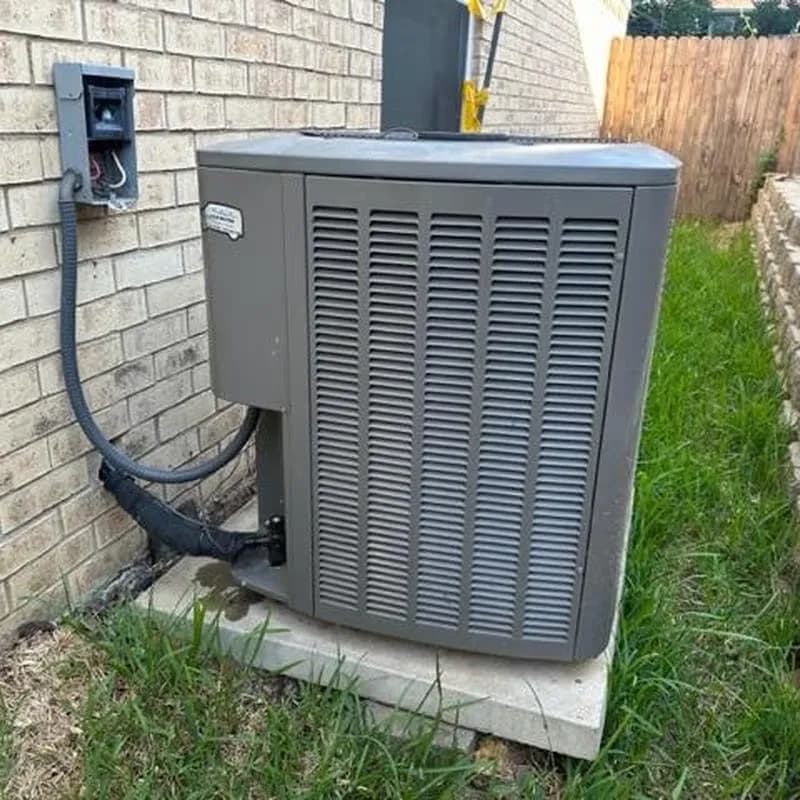
Imagine it's a Tuesday afternoon in August and the North Texas heat has just hit triple digits. You notice the thermostat creeping up despite the unit humming loudly in the backyard, and suddenly, that familiar fear of failure sets in. It's a stressful moment every Fort Worth homeowner dreads, especially when you're already bracing for another sky-high electric bill. We understand that your home should be a sanctuary, not a source of anxiety, and often the best solution for your comfort is replacing old air conditioner units before they leave you stranded in the heat.
You likely suspect that constant repairs are no longer a sound investment for your family. This guide will help you decide exactly when to stop patching up a failing system and start fresh to ensure long-term reliability. We'll walk you through the five unmistakable signs that your AC is reaching its limit. You'll also learn how updated SEER2 efficiency standards and new refrigerant transitions can transform your home's environment while protecting your monthly budget. It's time to trade the stress of a potential breakdown for the peace of mind that comes with a high-performance cooling system.
Key Takeaways
Learn how to identify the "danger zone" for Texas units and why systems older than 10 years often cost more to maintain than they do to replace.
Discover the $5,000 rule and how calculating the true cost of an inefficient R-22 system helps you decide if replacing old air conditioner units is the smarter financial move.
Understand the 2026 SEER2 requirements and why choosing a correctly sized system is critical for managing intense North Texas heat and humidity.
Find out what happens during a professional residential assessment, including why testing your ductwork is just as important as the unit itself.
See how a veteran-owned approach to indoor air quality ensures your new installation provides a healthier, more comfortable home environment for your family.
Table of Contents
5 Critical Signs You Should Be Replacing Your Old Air Conditioner
The Financial Logic: When Does AC Replacement Make Sense?
SEER2 and Sizing: Choosing the Right System for North Texas
What to Expect During Your Professional HVAC Assessment
Why Prestige Air is Fort Worth’s Trusted Choice for AC Installation
5 Critical Signs You Should Be Replacing Your Old Air Conditioner
Living in North Richland Hills or Keller means your air conditioning isn't just a luxury; it's a lifeline for your family's safety. While understanding How Air Conditioning Works helps you appreciate the mechanical complexity of these systems, you don't need to be an expert to see when yours is failing. In North Texas, the average lifespan of a residential unit is often shorter than the national average due to our intense 100-degree streaks. If your system is between 10 and 12 years old, you've entered the danger zone where internal components begin to degrade rapidly under the pressure of the Texas sun.
Are you caught in the "once a season" repair trap? Many homeowners find themselves calling a technician every June just to limp through the summer. If you're paying for emergency service calls or refrigerant top-offs annually, those costs add up quickly without providing a permanent solution. Often, the cumulative price of these recurring patches exceeds the long-term value of replacing old air conditioner units with modern, high-efficiency technology that offers true peace of mind.
The Humidity Signal: More Than Just Temperature
Your AC does more than just lower the temperature; it's a dedicated dehumidifier for your living space. As a compressor ages, it loses the ability to pull moisture from the air effectively. If your skin feels clammy or your home feels "heavy" even when the thermostat says it's 72 degrees, your system is struggling. High humidity isn't just uncomfortable. It can compromise your indoor air quality by encouraging mold growth in your ductwork and affecting the health of your family.
Strange Noises and Persistent Odors
A healthy residential system should operate with a steady, predictable hum. Squealing, grinding, or banging sounds often indicate serious mechanical failure in the motor or blower assembly that could lead to a total shutdown. Similarly, persistent odors like "dirty sock syndrome" suggest that bacteria or mold have taken hold within the evaporator coils. When these issues become chronic, they transition from a simple nuisance to a safety concern, indicating that replacing old air conditioner systems is the best path for a healthy home.
Watch your electric bills closely during July and August. If your utility costs are climbing while your home remains unevenly cooled, your unit is working harder for fewer results. Hot spots in the master bedroom or a kitchen that never quite cools down are clear indicators of a failing system. Upgrading to a new unit restores domestic harmony and ensures your environment is in capable, efficient hands throughout the hottest months of the year.
The Financial Logic: When Does AC Replacement Make Sense?
Deciding between a repair and a full replacement often feels like a high-stakes gamble with your family's comfort. To remove the guesswork, many industry experts use the "$5,000 Rule" as a reliable benchmark. You simply multiply the age of your unit by the cost of the quoted repair. If the total exceeds $5,000, the financial logic strongly favors replacing old air conditioner systems. For example, a $600 repair on a 10-year-old unit equals $6,000, suggesting your money is better spent on a modern upgrade rather than a temporary patch.
Modern systems must now adhere to new minimum energy efficiency standards, known as SEER2. In the intense North Texas heat, moving from an old 10-SEER unit to a 14.3 SEER2 or higher model can slash your monthly cooling costs significantly. While the initial investment is higher, the ROI is realized through lower utility bills and the elimination of those expensive, mid-summer emergency calls. It's about shifting your budget from reactive repairs to proactive efficiency.
The R-22 Refrigerant Phase-Out Impact
If your system was installed before 2010, it likely relies on R-22, commonly known as Freon. Because production of this refrigerant has ceased, it's now an obsolete and incredibly expensive commodity. Repairing a leak in an R-22 system is typically a "sunk cost" because the price of the refrigerant alone can rival the cost of major mechanical parts. Transitioning to modern, eco-friendly cooling agents ensures your home remains cool without the financial sting of a dying technology.
Maintenance vs. Repair: Knowing the Difference
It's vital to distinguish between a simple tune-up and a critical repair. A professional maintenance visit can often catch small issues, like a worn capacitor or a dirty coil, before they cause a total compressor failure. While a disciplined maintenance plan can delay replacement by several years by keeping the system calibrated, it cannot reverse fundamental mechanical fatigue. If you're unsure where your system stands on the financial spectrum, our team can provide an honest residential HVAC assessment to help you weigh your options with total transparency.
As of 2026, federal tax credits for HVAC have expired, making state and local utility rebates the primary way to offset costs. We focus on helping Fort Worth homeowners identify these local incentives to ensure you get the best long-term value. Investing in a new system isn't just about the hardware; it's about securing a predictable, lower-cost future for your home's environment.
SEER2 and Sizing: Choosing the Right System for North Texas
When you're replacing old air conditioner units, the most common mistake is assuming that "bigger is better." In North Texas, an oversized system is a recipe for a clammy, uncomfortable home. Because a larger unit reaches the thermostat's set point too quickly, it "short-cycles," turning off before it has the chance to pull humidity out of the air. This leaves you with cold but damp indoor air, which is the opposite of the domestic harmony we strive to provide. Getting the size right is a disciplined process that requires more than a simple guess based on square footage.
As of 2026, the minimum energy efficiency standard for residential systems in Texas is 14.3 SEER2. Unlike the older SEER ratings, SEER2 uses a more rigorous testing procedure that accounts for the external static pressure of your ductwork. This provides a much more accurate measure of how the system will actually perform in your home. While a 14.3 rating is the baseline, many Fort Worth families opt for higher efficiency models to combat our long, intense cooling seasons and maximize long-term savings.
To ensure your new system is a perfect fit, a professional load calculation, known as a Manual J, is non-negotiable. This methodical assessment isn't just about the size of your rooms. It considers your home's insulation levels, window orientation, and even the specific heat gain from the afternoon Texas sun. We also help you choose between single-stage and variable-speed technology. Variable-speed units are particularly effective here; they act like a dimmer switch, adjusting their output to maintain a precise temperature and superior humidity control throughout the day.
Matching the Unit to the Fort Worth Climate
In communities like North Richland Hills and Keller, our slab-on-grade homes and local humidity levels present unique challenges. A high-efficiency system does more than just cool; it reduces the overall electrical strain on your home's panel, which is vital during peak summer demand. We also emphasize checking your ductwork integrity. Even the most advanced SEER2 unit can't perform its job if your air distribution system is leaking or undersized, leading to those frustrating hot spots we've discussed.
Indoor Air Quality (IAQ) and Your New System
Modern air conditioning is about more than just a number on the thermostat; it's about the air your family breathes. During the process of replacing old air conditioner components, it's the ideal time for a professional IAQ assessment. New residential systems integrate seamlessly with advanced filtration and purification technologies. By optimizing airflow design, we can significantly reduce the circulation of dust and allergens, ensuring your home is a healthy, restorative environment for years to come.
What to Expect During Your Professional HVAC Assessment
A professional assessment is much more than a quick look at your current thermostat. It is a comprehensive diagnostic of your home’s entire thermal environment. When you're considering replacing old air conditionerunits, we begin with a thorough walkthrough of your property. This includes measuring every room, checking window orientations, and evaluating your home's envelope. We don't believe in "ballpark" estimates; we believe in precision. Our goal is to provide a transparent, fixed-price quote that reflects your specific cooling needs without hidden surprises or last-minute additions.
Testing the "bones" of your system is a critical step that many providers overlook. We inspect your ductwork for air leaks and evaluate your attic's insulation levels. If your ducts are undersized or disconnected, even the most advanced new unit will struggle to perform. By addressing these foundational issues during the assessment, we ensure your new system delivers the comfort you expect. Generally, a full residential replacement takes between 8 to 12 hours. We coordinate every logistical detail to minimize disruption to your family's daily routine, ensuring a steady and purposeful transition to your new equipment.
Preparing Your Home for Installation Day
To ensure a smooth transition when replacing old air conditioner systems, we recommend clearing a workspace around your indoor air handler and the outdoor condenser unit. Our team takes great pride in respecting your property, using drop cloths and floor protectors to safeguard your flooring and furniture throughout the process. Before the work begins, your lead installer will walk you through the plan for the day. This is the perfect time to ask questions about the specific mechanical processes or the timeline of the installation.
The Post-Installation Verification
Once the new unit is in place, our work continues until we are certain of its performance. We perform a rigorous post-installation verification, testing the system under full load to confirm it meets manufacturer specifications and SEER2 efficiency standards. We then provide a personalized orientation to help you master your new smart thermostat. You'll also receive a clear explanation of your warranty and the specific maintenance requirements needed to keep your environment in capable hands for the long term. If you're ready to move from guessing to knowing, schedule your professional residential AC assessment today.
Why Prestige Air is Fort Worth’s Trusted Choice for AC Installation
When you're replacing old air conditioner systems, the technical specifications are only half the battle. The other half is finding a partner you can trust inside your home. As a veteran-owned and family-operated business since 2020, we bring a level of discipline and integrity that is often missing in larger, commercial-focused firms. We aren't interested in high-pressure sales or vague "ballpark" guesses. Instead, we focus on precise execution and transparent solutions tailored specifically to your family's unique needs.
By focusing exclusively on residential HVAC, we ensure our expertise isn't diluted by commercial distractions. We understand the specific architecture of North Texas homes, from slab-on-grade foundations to attic-based air handlers. This focused expertise allows us to perform the thorough IAQ assessments and ductwork checks that larger companies might rush through. When we are replacing old air conditioner units, we aren't just swapping out equipment; we are restoring your home's comfort, efficiency, and breathability.
Our Disciplined Approach to Home Comfort
Our military background informs every standard we set for our team. It means we arrive on time, maintain a clean workspace, and double-check every mechanical connection before we consider the job done. We treat every home as if it were our own family’s, ensuring that your environment is in capable, caring hands. This principled approach is the foundation of the Prestige Air guarantee. We provide reliable service you can count on, backed by the technical proficiency required for modern SEER2 standards.
Serving Our North Texas Neighbors
We take great pride in being a dedicated member of the local community. Serving Keller, North Richland Hills, Southlake, and the surrounding DFW area isn't just a job; it's about helping our neighbors stay safe during 100-degree streaks. Our deep understanding of local building codes and specific climate stressors ensures your new installation is both compliant and optimized for long-term performance. As a family-operated provider, we value honesty and transparency above all else. We are here to be the guardian of your home comfort, providing professional reassurance when you need it most. Schedule your professional HVAC assessment with Prestige Air today!
Securing Your Home’s Comfort for the Next Decade
Deciding when to stop patching up an aging system is one of the most important financial choices you'll make as a homeowner. We've explored how the 10-year "danger zone" and the rising costs of obsolete refrigerants make replacing old air conditioner units a strategic investment in your family's safety. By choosing a system that meets modern SEER2 standards and is correctly sized for your specific North Texas home, you can eliminate uneven cooling and the constant fear of a mid-summer breakdown.
Our team at Prestige Air is here to guide you through this transition with the discipline and integrity you expect from a veteran-owned, family-operated business. As dedicated residential specialists, we include expert IAQ assessments with every consultation to ensure your home's air is as clean as it is cool. Don't wait for the next triple-digit heatwave to force your hand. Get Your Professional AC Replacement Quote from Prestige Airtoday and take the first step toward lasting domestic harmony. You deserve a reliable sanctuary where you can truly relax, regardless of the temperature outside.
Frequently Asked Questions
How much does it typically cost to replace a residential AC in Fort Worth?
The total investment for a new system varies based on your home's square footage, the SEER2 efficiency rating you select, and the complexity of the installation. Factors such as the condition of your existing ductwork and the specific cooling requirements for your property also play a significant role. Because we focus on precise, residential-only solutions, we provide detailed assessments to give you a clear, honest quote. This transparency ensures you understand the long-term value of your new system without any guesswork.
Is it better to repair or replace an AC that is 12 years old?
At 12 years old, a residential system is generally a candidate for replacement rather than a major repair. In our harsh North Texas climate, internal components often face significant mechanical fatigue by this age. Continuing to patch a unit that is over a decade old can lead to a cycle of expensive, frequent service calls. Choosing to invest in replacing old air conditioner equipment at this stage ensures better reliability and long-term savings for your household.
How long does a new air conditioning installation usually take?
A standard residential air conditioning installation typically takes between 8 and 12 hours to complete. This timeline allows our team to remove the old equipment, install the new indoor and outdoor components, and perform a rigorous post-installation verification. We prioritize a disciplined, methodical approach to ensure every connection is precise. Our goal is to minimize disruption to your home while ensuring your new system is ready to handle the next triple-digit heatwave with ease.
What SEER2 rating do I need for a home in North Texas?
The minimum required energy efficiency rating for new residential central air conditioners in Texas is 14.3 SEER2. This standard took effect in 2023 to ensure better real-world performance in hot, southern climates. While 14.3 is the baseline, many Fort Worth homeowners choose higher ratings to maximize their monthly savings. Selecting a unit with a higher SEER2 rating provides superior humidity control and efficiency during our long, intense summer months, keeping your environment in capable hands.
Can I replace just the outdoor AC unit and keep my old indoor coil?
We strongly advise against replacing only the outdoor unit while keeping an old indoor coil. Modern high-efficiency systems are designed as matched sets to achieve their rated SEER2 performance and efficiency. Using an old, mismatched coil can lead to premature compressor failure, reduced cooling capacity, and the loss of your manufacturer's warranty. A complete system replacement ensures all components work in harmony to provide the restorative, reliable cooling your family deserves for the long term.
Will a new AC system really lower my monthly electric bills?
Yes, upgrading to a modern system can significantly reduce your monthly utility costs. Older units often operate at a fraction of their original efficiency due to mechanical wear and outdated technology. By replacing old air conditioner units with high-efficiency SEER2 models, you reduce the electrical strain required to cool your home. Many homeowners notice a substantial difference in their July and August bills, as the new system cycles less frequently while providing more consistent comfort.
Does Prestige Air offer financing for new AC installations?
Homeowners should explore current options for local utility rebates and third-party incentives that may be available for high-efficiency upgrades. We focus on providing a transparent, fixed-price quote so you can make an informed decision about your home's comfort without any high-pressure sales tactics. Our team is dedicated to helping you understand the long-term ROI of a new system. We recommend checking with local providers for the most current financial programs that support residential HVAC investments in your community.
What is the $5,000 rule for HVAC replacement?
The $5,000 rule is a simple benchmark used to determine if a system is worth repairing. You multiply the age of your unit by the cost of the quoted repair; if the total exceeds $5,000, replacement is usually the smarter financial choice. For instance, a $500 repair on a 12-year-old unit equals $6,000, suggesting your money is better spent on an upgrade. This calculation helps homeowners make a disciplined, logic-based decision for their home's future.